

 Teach English in Asia
  Cruise Ship Jobs
  Alaska Fishing Industry Jobs
  Sharing Economy / Gig Economy
 Alaska Crabbing Jobs – Introduction
Crabbing is the most important of Alaska’s commercial shellfish industries. Three kinds of crab – Alaska king, tanner, and Dungeness – are fished commercially in Alaska waters.
King Crab
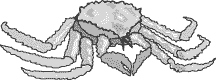 The Alaska King Crab fishery is the grand daddy of Alaska’s crab fisheries. The fishery was again made famous by Discovery Channel’s hit TV show “Deadliest Catch.”
Most of the King Crab in Alaska are caught between October and January. Before the 2006 season the fishery used to be a derby-style fishery and used to last just a couple of days. But now the fishery is based on fishing quotas and fishermen can catch the crab over a much longer period of time. One key reason that the quota system was put into place was to make the fishery a safer fishery by not forcing fishermen to have to harvest crab during dangerous weather conditions.
Alaska crab fishing boats range in size from 39 to 246 feet in length and usually carry between 150 and 300 crab pots. Each crab post weighs 600-800 pounds and is lifting in and out of the water with an hydraulic lift system.
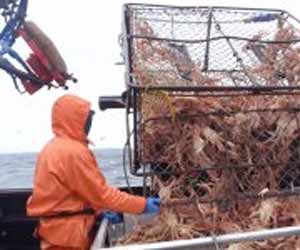
King crab fishing is the extreme of Alaska fisheries. Although the earnings a deckhand can make can be outstanding, the fishing is done in the fall and winter when weather conditions can be very harsh and thus make for a great reality TV show.
Although it does happen, it is pretty rare that a “greenhorn” gets a job on a Alaska King Crab boat. We usually recommend getting some experience in at least one of the other fisheries prior to trying to land a king crab deckhand job in Alaska.
You can learn more about getting a king crab fishing job at AlaskaJobFinder.com.
Tanner Crab
 When the king crab fishery crashed in 1980, crabbers either diversified and worked salmon, halibut, and other fisheries, or focused on the two varieties of tanner crab – bairdi and opilio.
Both king and tanner crab are harvested offshore, and although they occur in small numbers in Southwest, the most important fisheries are in Kodiak, Bristol Bay, and the icy waters of the Bering Sea. Various kinds of crab pots – some of which are up to 10 feet square and weigh hundreds of pounds – are baited with herring, cod, or pollock and lowered from crabbing boats to the floor of the continental shelf and marked with a buoy. The boats return later and haul up the traps, each of which are often laden with hundreds of pounds of crab.
Dungeness Crab
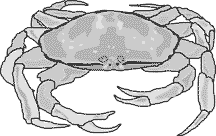 Dungeness make up a relatively small portion of Alaska’s annual crab haul. This catch is harvested from Alaska down the Pacific coast to Mexico, so crabbers also concentrate on other species unless prices are high. Unlike kings and tanners, Dungeness are typically found in shallower waters, especially near river mouths.