

 Teach English in Asia
  Cruise Ship Jobs
  Alaska Fishing Industry Jobs
  Sharing Economy / Gig Economy
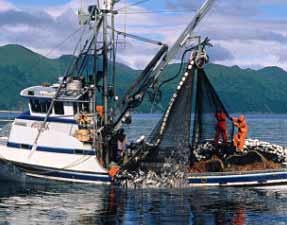
 Captain Profile – Purse Seining for Salmon
Rod Olsen, who has been fishing since he was fourteen years old, is captain of a purse seiner out of Kodiak.
I started fishing with my dad and older brother, saved up some money, and then bought a “junker,” or starter boat and just kept working my way up. I’m now on my fourth boat. We usually get up at about 3am or just before daylight, and sail out to our fishing site. Over the years fishermen have figured out which capes and points the fish like to congregate near, so a line forms at these places before daylight. All 300 seiners in Kodiak have a permit to fish anywhere in the area, but captains find places they like and stick to that year after year. Because only one boat can set its net out at a time, we have to wait our turn until we can set out our own net and haul it in. The first guy makes his set as soon as daylight hits. Each day we make three or four sets a day, but it depends on how many boats are waiting; if there’s only four boats, we can make eight to ten sets in a day.
One person – usually a greenhorn – is designated cook, and he also stacks the nets. The other crew members take turns doing dishes and cleaning the galley. One of the crew members takes care of the stuff on the deck, fixing nets, and making sure everything’s in order up top. The skiff man takes care of the skiff. Operating a skiff can get pretty dangerous, especially in rough weather. The main problem is the skiff gets swamped and then it flips, leaving the skiff man out in the freezing water. Most captains will call it quits when the weather gets real rough, but some will take more risks. One year we actually used a greenhorn as the skiff operator, but when it got rough we’d go fish in calmer waters.
At the end of the day we have to deliver our catch to a tender. Tenders lower a brailer, which is a big basket, and we sort the fish by species, usually throwing the pinks in first and then the sockeyes. After we’ve off-loaded the fish we anchor up, get a little sleep, and head out again the next day bright and early. We go into town about once a week to stock up on supplies.
We fish for sockeye and pink salmon, and our season lasts from June 1 to about September 10. We fish sometimes sixty days straight, but it depends on the size of the run. If the run is small we might have a few days off, but then we make less money. The lack of sleep can be tough, but you’re not up all day long, so we usually take a nap, clean the galley, or watch videos while we’re waiting in line.
I prefer to hire crew members who don’t live in Kodiak, because they like to go home a lot more often. Locals usually do some kind of fishing year-round, so they don’t see the need to work for a month straight on a boat. Someone from the Lower Forty-eight usually wants to work as much as possible, though, since they’re only going to be in Alaska a short time and they don’t have a home in Kodiak.
I like to take one or two greenhorns up every year. That way if an experienced deckhand leaves the next year I’ll have trained someone the previous year who can take over the experienced deck duties.
I’ve hired people from Arizona, California, and Seattle, and they usually work out fine. Some experience is pretty nice, because you never know exactly how someone’s going to react to being on a boat. They might be real hard workers and very gung ho, but find out that they just don’t like it up there. I mean, they have to get up at three in the morning, it’s cold and it’s wet, the galley is cold, and they just can’t adapt. But for others, it’s a great adventure. I see a lot of kids walking the docks, but they don’t have a lot of money so they usually end up working in a cannery, but they always keep their ears open for any fishing jobs.
We had a guy who was really strong and a sharp college student, but he couldn’t stand on deck when it was rough, he couldn’t tie knots, and he’d always pull the wrong lines on deck. He was smart, but he just couldn’t learn what he needed on a ship. Also, the work gets real tedious, you do the same thing every day for almost three months, and you can get pretty sick of it.
Those are the drawbacks, but the benefits are a trip you won’t forget and quite a bit of money. You don’t spend a dime while you’re up there, so you get paid this huge chunk of money at the end of the trip. The average boat in Kodiak might gross about seventy or a hundred grand for a season, and the crew share for an experienced deckhand is about 10 percent, so he might make $10,000, all of which they get in a lump sum.