

 Teach English in Asia
  Cruise Ship Jobs
 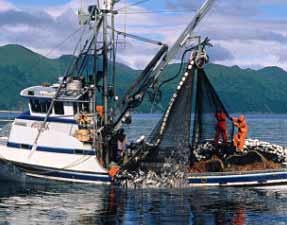 Alaska Fishing Industry Jobs
  Sharing Economy / Gig Economy
 The Environmental Law Field
In 1970, the U.S. government signed into law the National Environmental Policy Act (NEPA).
This law, along with the Environmental Quality Improvement Act, was enacted to protect the environment from public or private actions that could cause serious, irreversible damage.
These laws established a national policy for the improvement of the environment and set standards for state and government projects (infrastructure, urban planning, and commercial building) to uphold these standards to protect the environment from industrial and commercial encroachment. Since this act was signed into law, state and local governments have adopted its policies to protect the environment form government projects.
There are a number of federal environmental statutes that make up environmental law. These are all aimed at the protection of various aspects of the environment, and include:
- The Clean Air Act
- The Clean Water Act
- The Pollution Prevention Act
- The Toxic Substances Control Act
- The National Environmental Policy Act
- The Resource Conservation and Recovery Act
- The Federal Insecticide, Fungicide and Rodenticide Act
Education
The standard requirements to become a lawyer include a bachelor’s degree, completion of the Law School Acceptance test (LSAT), followed by admission into a university’s law school, and certification upon passing a state bar exam.
For a career in environmental law, a multidisciplinary background is recommended. Courses in english, the foreign languages, public speaking, political science, criminal justice, history, to name a few, are useful.
Environmental lawyers will usually have an undergraduate background in varying fields of environmental science including, among others:
- Biology
- Environmental Science
- Marine Science
- Natural Resource Management
- Wildlife Studies
- Agricultural Science
- Forestry
Top Environmental Law Programs
- Vermont Law School, the Environmental Law Center
- Lewis and Clark Law School, Portland, OR
- New York University School of Law, Center on Environmental & Land Use Law
- Pace University Law School, White Plains, NY
- University of California-Berkeley (Boalt Law)
- Stanford University Law School
- George Washington Law School
- Yale Law School
- Golden Gate University, School of Law, Environmental Law
Professional Outlook
Public concern over environmental issues has resulted in a complex and dynamic body of environmental law. With so many laws at the national, state, and local levels, and because laws are constructed with broad possibilities for interpretation, Environmental Law is a fast-growing field with important responsibilities for environmental conservation and protection.
Environmental Law Careers
There are many different career paths available to environmental lawyers. Environmental lawyers work for law firms (large and small, private and public), public interest or advocacy organizations (EPA), non-profit groups, as well as in the compliance departments of large corporations and industries that must follow environmental regulations. They also work for government agencies to develop and enforce regulations.
Environmental Lawyer
Environmental lawyers defend the environment against threats and damage.
They enforce the laws created to prevent, and punish, actions that compromise air and water quality, threaten ecosystems, or otherwise damage the environment. Environmental lawyers ensure that corporations and businesses are held liable for their ecological impact.
Corporate Regulatory Positions
As more and more Enrons, Halliburtons, and ExxonMobils surface and show their true colors, the need to hold corporations accountable for their actions is greater than ever. Environmental lawyers working with, or for, corporations and big businesses ensure that these entities are more responsive to environmental issues. Environmental lawyers who join corporations get the opportunity to work from the inside out, acting as watchdogs while advocating the adherence to environmental policies and standards for corporate America.
Resources
- Environmental Law Alliance Worldwide
- American Bar Association
- Earthjustice