

 Teach English in Asia
  Cruise Ship Jobs
 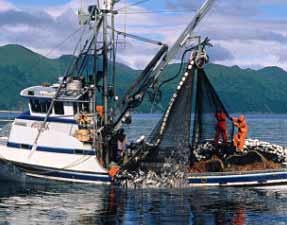 Alaska Fishing Industry Jobs
  Sharing Economy / Gig Economy
 Geophysicist Jobs
Assessment and Awareness Sector
A geophysicist is sometimes referred to as a geoscientist however it’s important to distinguish the two as the latter term actually encompasses both geophysicists and geologists.

While geologists deal with the composition and processes of the earth’s surface and subsurface, geophysicists are concerned with the physics, mathematics and chemistry involved in the composition of the surface, subsurface, atmosphere, oceans and more. They are also concerned with the processes of magnetic, electrical and gravitational forces. Just as there are many subset fields in geology, there are almost as many in geophysics. Some geophysicists are more properly called atmospheric scientists, but others specialize in seismology, geomagnetism, paleomagnetism and geodesism. The most prominent career for geophysicists in the field of alternative energy is that of physical oceanographers. Physician oceanographers usually work with hydroelectricity, studying water currents, temperature, density and salt-levels of the ocean.
Unlike some other scientific jobs, such as meteorologist, a geophysicist will find that they spend quite a lot of time on the field; this means being outdoors, physically measuring data and taking samples and notes. Travel is often required of these positions and some geophysicists spend a lot of time in remote locations. This is not to say that there isn’t office work involved. In order to collect, report and interpret data related to alternative energy production, it is important that geophysicists also spend a considerable amount of time in the office and laboratory.
Educational and Training Requirements
Any geophysicist position requires a minimum of a bachelor’s degree, usually in the geosciences field.
This is not position for which you are able to submit work experience as compensation for a lack of educational credentials. In fact, in many cases, you may find you will need more than just a BS in geosciences to get work. This is not to say that having a BS in this field is the bottom line, as you can take some classes in the geosciences as well as mathematics, physics, chemistry and more. With an undergraduate degree in sciences and enough relevant experience, you may be able to get a job as a geophysicist, but it will be much harder. In fact, many geophysicists currently employed possess a master’s degree and if you intend on working in high-level research or as a professor at a university or college, a PhD is very often required. Some, but not all states, require you to have a license. In many cases, this means you will need the proper education and experience as well as pass an exam.
Salary and Advancement Opportunities
Geoscientists generally enjoy considerable room for advancement in their careers. As an entry-level geoscientists, much of your initial time will be spent on the field researching, collecting and analyzing data, however with education and experience, it is entirely possible to move to a more managerial position. If you are in a project manager job or reach a senior level in research, you may find yourself dealing with budgetary concerns and communicating with clients and executives.
At the moment, the Bureau of Labor Statistics reports that those geoscientists with a master’s degree have a much better chance of finding a job. If you possess a bachelor’s degree, you are well on your way, but more education is often required if you want to remain competitive in today’s economy. As is sometimes the case, those who possess a PhD are facing more competition when applying for research jobs at private companies or with universities or colleges. Fortunately, geoscientists should see a 22 percent increase in jobs from 2006 to 2012. The Bureau reports that the average annual income for geoscientists, which includes geophysicists, is $89,300. According to Payscale.com, a geoscientist with one to four years of experience may earn from $42,500 to $90,000, while a geoscientist with 10 to 19 years on the job can expect from $56,600 to $145,451 annually.