

JobMonkey YouTube icon JobMonkey Pinterest icon JobMonkey Jobs RSS icon JobMonkey LinkedIn icon JobMonkey Google Plus icon JobMonkey Twitter icon JobMonkey Facebook icon
JobMonkey Home Find a Job JobMonkey Blog - Discuss Oil Careers Travel Information Job Tools - Learn how to find and get a job Post a Job on JobMonkey

Offshore Oil Platforms

Offshore oil wells handle the task of recovering crude oil reserves from lake beds and ocean floors alike. The world's first offshore oil rig was built in 1869, the same year that designer T.F. Rowland patented his offshore rig design.
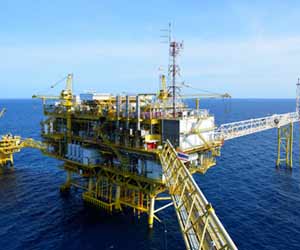
Rowland's concept resembles modern offshore drills, but his designs were used only in shallow waters. Developments in offshore technology wouldn't allow for deep sea drilling until after World War II. In 1947, deep water drilling began in the Gulf of Mexico, which remains one of the primary offshore sites today. On a global scale, there are 971 total offshore rigs comprised of 676 mobile rigs and 295 permanent platforms.

Offshore oil drilling is a successful enterprise, with a variety of oil rig jobs including driller, shakerhand, toolpusher, floormen, ballast controlman, barge engineer or rig welder. Offshore oil wells are sometimes the only crude oil production that a country has. The wells off the coast of northeast Australia's Barents Sea provides the country with nearly 90% of its total petroleum supply. Offshore oil rigs account for 25% of the United States natural gas reserves and 24% of its oil production. Estimates say that on average over the last several years almost 100 wells a year in the Barents Sea have been discovered. This leaves Australia's northern coast as a fertile front for oil extraction. The area could see an explosion of offshore rigs in the near future. Technology has enhanced offshore drilling, as depths of 2 miles can now be reached, drilled and mined.

This is welcome news when considering that shallow water reserves are slowly being depleted.

Another offshore are poised for economic explosion are the Campos and Santos Basin that are located off the southeastern coast of Brazil. The Santos Basin is a relative newcomer that was discovered in October 2007. Experts differ over how much reserve is located here, but they can all agree that it is a substantial amount. The Santos Basin currently has less than 100 oil wells, but they present great challenges as some of the wells are located at depths of up to 2,140 meters. The Campos Basin, by contrast, is established and accounts for 80% of Brazil's total oil production at 1.8 million barrels per day through 1,130 total wells.