

 Teach English in Asia
  Cruise Ship Jobs
  Alaska Fishing Industry Jobs
  Sharing Economy / Gig Economy
 Ski Shop Industry Overview
Retail Winter Sports Equipment Sales
Skis, snowboards, boots, and clothing have become more technical than ever in recent years, and shop workers need to keep up with the changes. It’s economically imperative for the staff to be knowledgeable. The salesperson out front has to be able to say why a North Face jacket costs what it does, what the fabrics are, and what they do. Sales people have to justify what they’re selling, why one fabric is better than another. There are so many options; if they can explain them to the customer, then those people will feel much better about what they buy. The shops sell fashion and function.
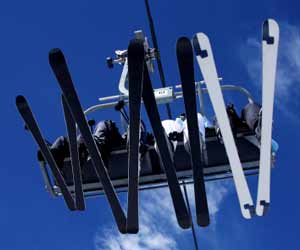
The fall issues of popular snowsports magazines are very knowledgeable on equipment and issues, though many people in sales feel you have to step back from “the hype reports” and the advertising. Nonetheless, magazines are a starting point for information. In fairness, the technology has gotten to a point now that to say one particular ski is the best is just not possible. There are a lot of great skis, and the new deeper exaggerated sidecuts almost make turning the ski effortless.
The staff in shops that sell both skis and snowboards deal with customers of all persuasions. According to one industry insider, shop employees need to be crazy about the sport, and yet be able to act professionally on the job.
There’s a perception that only snowboarders can sell snowboards, which would explain the big success of snowboard specialty shops. Marcella Dobis was one of the world’s top snowboarders until she retired at age twenty-three to open her own snowboard shop. When competing, she snowboarded up to 130 days a year. Now, with the pressures of running her own business, she says she’s lucky to get out on the snow twenty-five times a season. And she lives only twenty miles from the most famous snowboarding hill in the country, Mt. Baker. Dobis has noticed an increase in skiers who are crossing over to snowboarding, as she did herself.
All shops catering to winter sports are specialty stores, but they like to think they sell quality merchandise at competitive prices. Compared to big chain stores in the city, these shops are small, with small advertising budgets. But they strive through attentive service to compete with the big guys.
As another ski shop owner explains:
“We can set up a new skier as price-competitive as the chain store, but we can give better service whether it’s for a pair of $900 boots or for $200 boots.”
One of the absolute best things about working in the ski and snowboard industry: discounts on gear. Manufacturers give screamin’ deals to the people who sell their gear.
— Search Ski Industry Job Postings —
Back Shop
Ski technicians or ski techs, the people who work on boots, bindings, and boards in the back rooms of ski shops, are required by equipment manufacturers to pass tests and become certified before they are allowed to work on their brands.
Courses are given in early fall by traveling company representatives, and clinics are offered to employees during the ski season. The best sources of information on these programs are the ski shops themselves.
A long-time shop owner explains why he prefers to hire someone with certification:
“I have a $25,000 to $30,000 machine in the back shop for tuning skis, so it pays for it to be operated correctly. I send my employees to ski tuning clinics. We also have a lot of in-store clinics.”
One level of certification allows technicians to work on and fit rental skis and boots, including binding adjustments. A higher level qualifies employees to work on customer-owned equipment, including skis just purchased in the store.
For liability reasons, they cannot do any work on bindings that are too old. Some people bring in old skis and bindings for an upgrade, but if it’s not included in a current DIN rating (the industry standard for boot and binding settings – usually five years) it can’t be touched by a shop employee.
In addition to mounting and fitting, shop workers repair skis. The nature of ski bases is that they are porous. Through use, the waxes are compressed to the point that the pores become clogged and new wax does not hold. Recreational skis normally need the clogged bases removed every few years with a stone grinding machine. The process also removes most divots and gouges.
Another special skill required of shop workers is boot fitting, which takes some training and practice to be able to do right. Even a highly respected shop like The Boot Doctor at Taos Ski Valley will fine-tune a boot five or more times during a customer’s ski week. The technician may even use heat to raise a boot bubble at a particular sore point.
Normally, back shop employees are hired exclusively to work with skis, mountings, tunings, and repairs. But they’re also expected to know the retail side, to help out during the busy times.