

 Teach English in Asia
  Cruise Ship Jobs
  Alaska Fishing Industry Jobs
  Sharing Economy / Gig Economy
 Types of Alaska Salmon
Chinook salmon (king) or Oncorhynchus tshawytscha
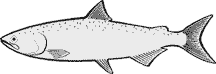 This is the largest of the five Pacific salmon species, with mature adults growing to about 40 inches in length and weighing an average of 22 pounds. However, kings may grow as large as 100 pounds or more. In Alaska waters, 40- to 50-pounders are not uncommon. This fish is the prize of the industry, but only accounts for one percent of the harvest.
Distinguishing characteristics: X-shaped dots on the back and dorsal fin; black pigment along the gum line; and red or almost white flesh (rarely pink)
Sockeye salmon (red) or Oncorhynchus nerka
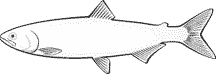 The sockeye is Alaska’s most valuable fish. The Alaskan adult averages 24 inches in length and six to nine pounds. Sockeye account for 25 to 30 percent of Alaska’s commercial salmon harvest. They are also called reds because males turn a brilliant red color when spawning.
Distinguishing characteristics: metallic greenish-blue coloration on its back with fine black specks on its sides, a lighter colored belly, and a tail that is often translucent green
Coho salmon (silver) or Oncorhynchus kisutch
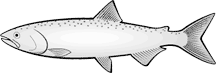 Coho salmon is the third most valuable of Alaska’s salmon. It is the primary catch of the Alaska troller. Coho, also known as silvers, are often sold whole in seafood markets, but may also be smoked or canned. They average 29 inches in length and nine pounds in weight, but may reach up to 30-plus pounds. Coho amount to about five percent of the total salmon harvest.
Distinguishing characteristics: metallic blue back coloration, dime-bright silver on the sides, belly, and tail. Irregular black spots are scattered over the back and usually on the upper lobe of the tail; flesh is usually pink or red.
Chum salmon (dog) or Oncorhynchus keta
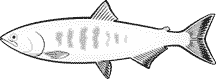 These fish are of lower value to Alaska fishermen because their meat is a pale, yellowish color which makes them unmarketable as red salmon. Nevertheless, chum meat is widely marketed in stores in the lower forty-eight. They reach an average length of 30 inches and a weight of eight pounds. The largest chum on record weighed in at around 30 pounds and was caught in Alaska.
Distinguishing characteristics: the back is metallic blue with infrequent dark specklings; pectoral fins, anal fins, and tail have dark tips; spawning adults have a hooked snout with vicious-looking dog-like teeth. Chums retain their parr marks which look like dark purple stripes running vertically down their sides.
Pink salmon (humpy) or Oncorhynchus gorbuscha
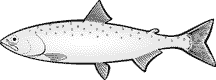 These are the smallest and least valuable, per pound, of Alaska salmon. However, these little salmon are the most abundant of them all. They are almost exclusively used for canning and are the main catch of many purse seining boats. At maturity they average 16 to 22 inches and usually reach weights of about four pounds. They are most common in Southeast (Region 1). Male pink salmon develop a large hump on their back prior to and during spawning; thus the name humpy.
Distinguishing characteristics: large black spots on the back, the adipose fin, and on both lobes of the tail; oval tail spots; sides are silvery with very fine scales, similar to chinook when in the sea; belly is white and back is steely blue to blue-green; the flesh is pink