

 Teach English in Asia
 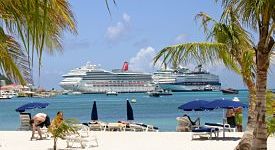 Cruise Ship Jobs
  Alaska Fishing Industry Jobs
  Sharing Economy / Gig Economy
 Budapest City Profile
Budapest is the only metropolis in Hungary. As the capital city it stands out among all of the major cities of Eastern Europe as the most cosmopolitan and the most Western in its orientation.
With a population of two million, and located in the center of the western half of the country, Budapest serves as the hub of commerce and culture in a country that is predominantly rural. Though there are a few medium-sized cities whose economies depend primarily on industry or agriculture, Budapest can boast of, among other things, an opera hall, several museums, many upscale shops, an exquisite cathedral, parks, and numerous restaurants and coffee houses. For the expatriate, Budapest offers almost anything that a city dweller could want.
You won’t easily forget its recent emergence from the shackles of Soviet repression, however, even though Hungary’s capital suffered much less than Warsaw or Bratislava. Evidence of the old regime is less obvious here than in these other cities probably because the Kremlin gave Hungary a longer rope, allowing the local government to experiment with certain aspects of a free market economy long before the rest of Eastern Europe.
Between the metro, bus system, and tram lines, Budapest is relatively easy to navigate. And much of the city can be covered on foot. There are restaurants, pastry shops, and bars everywhere, and many of them cater to an expatriate clientele. If you want culture, there are plenty of theater and opera performances. And if you’re after peace and tranquillity, you can venture over to the hilly Buda-side of the city to one of the venerated mineral baths that Budapest is famous for. For a terrific view of the city, go to the top of Castle Hill, where you will find the 13th-century Baroque Matthias Cathedral, the Royal Palace, which houses the Hungarian National Gallery, and Budapest’s oldest bakery, Ruszwurm Cukraszda.
Or check out the neo-Gothic Parliament building (Orszaghaz), which was designed by the Hungarian architect Imre Steindl and built by no less than 1,000 workers over a 17-year period (1885–1902).
Long ago, what is now Budapest was actually two different cities divided by the Danube river. Buda lay on the north side of the river – older with more rugged, hilly terrain – while Pest extended flat and plain-like on the south shore. Today, little evidence exists of those two historical incarnations, while the atmosphere and the cityscape of Budapest has retained both its human proportions and its nostalgia.