

 Teach English in Asia
 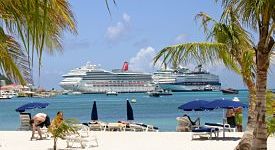 Cruise Ship Jobs
 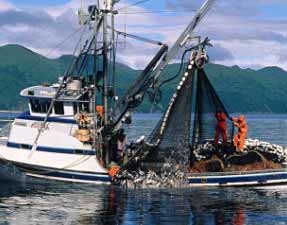 Alaska Fishing Industry Jobs
  Sharing Economy / Gig Economy
 Politics in Poland
Like most of the other governments in the region, Poland is governed by a multi-party parliamentary democracy. A president is elected by the general population to act as head of state, while a prime minister (nominated by the President) and a cabinet are entrusted with executive powers.
Since the Solidarity uprisings and the revolution of 1989, Poland has been no stranger to political instability. As in other parts of Central and Eastern Europe, Poland has experienced the economic problems associated with the difficulties of building a market economy from the ruins of the Soviet system. Suffering from a combination of high unemployment, inflation, and perhaps a mistrust of the new political order, Poles have been politically indecisive – never seeming quite certain of the causes of their economic afflictions, or knowing which party or political philosophy might bring a cure quickly enough.
As in the other countries of Eastern Europe that were previously subjected to Soviet-style centralized government, certain aspects of the old status quo remain attractive to large sectors of the Polish population, especially amongst the older generations who have always looked to the state for various forms of social support, such as government-enforced price controls, housing subsidies, and health care. The attractiveness of freedom of expression and the pursuit of wealth under a system of private enterprise is frequently overshadowed by the more immediate and pressing questions: Who will pay for housing as price controls are lifted? Will the government have the wherewithal to provide care for the elderly? What is going to be done about the high rate of inflation? Will basic foods remain affordable to the average Pole?
Questions such as these are not easily answered when such major political and economic transitions are being made. For the foreseeable future, Poland will suffer the difficulties of a major economic transformation – essentially an enormous political, economic, and social experiment brought on by the vagaries of recent history. The economic opportunities presented by Poland’s newly emerging market economy are not lost on the rest of the world, however. Major foreign investments, which will help to invigorate the Polish economy, are announced regularly in the newspaper. And the Polish population, especially those in the younger generations, are well aware of the challenge ahead. Poland’s universities are graduating students who are eager to make helpful contributions that will benefit the country as a whole.