

 Teach English in Asia
  Cruise Ship Jobs
  Alaska Fishing Industry Jobs
  Sharing Economy / Gig Economy
 Types of Oil Rig Jobs
Like any workplace, there is a hierarchy of jobs on an oil rig. When you’re breaking in there’s a good chance you will start out on the bottom step of the ladder unless you possess specialized skills, training, and education.
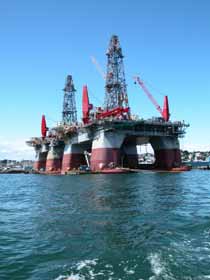
Working on a Rig – Pay, Positions, & More
Fortunately, even pay for the most physically demanding, entry-level oil jobs is not too bad. Roughnecks earn between $18.00 and $25.00 per hour depending on the work location and company. With overtime included, the average annual income is more than $31,000 per year.
Crews on oil drilling rigs operate in drilling crews, which are teams of people with specified tasks and responsibilities. The rigs usually operate day and night, 7 days per week, with three or four separate crews putting in either 8- hour 12-hour shifts. It would be common to go eight hours on, eight hours off or 12 on, 12 off. This is the same whether the rig is on land or offshore.
When everyone is working well together on their team, the drilling operation gets the job done safely and efficiently. It can be challenging to keep ones composure when it’s hot, when temperatures reach 30-below, or in rough weather offshore.
Here’s the typical organization structure on a drilling rig:
Each of the teams is comprised of the driller (or rotary driller), derrickhand, motorhand, roustabout, and roughneck. The rigs themselves are owned and operated by a drilling contractor, who goes out and wins bids from exploration companies.
QUICK FACT?There are more than 1,700 rotary oil rigs in the United States. The vast majority are on land. (Source, Baker-Hughes).