

 Teach English in Asia
  Cruise Ship Jobs
  Alaska Fishing Industry Jobs
  Sharing Economy / Gig Economy
 Casino House Odds
In gambling, odds appear in a variety of ways. They serve as a prediction of sorts whether you’ll draw a certain card, or if you’ll roll the right number, or whether the horse you’ve wagered on will take first place at the finish line.
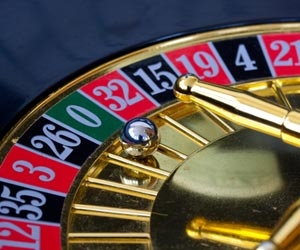
Most people are familiar with these types of odds or chances of winning. Besides general odds, casinos have special house odds that further influence the chances of winning an amount that will be paid out. While the breakouts on actual percentages and their computations can be confusing, the theory behind house odds is simple. It holds that sooner or later the casino will win more money than it will lose due to human nature and the law of averages.
The business side of gaming operations dictates that odds for all games favor the casino. This ensures a profit margin. House odds along with general odds combine to create what is known as the “edge” or “house advantage.” This is built into every game through the casino’s specific rules regarding how the game will be played, betting procedures, and payoff policies.
To better understand how house odds work in conjunction with payoffs, experts often cite the following example. Take the act of flipping a coin. Heads you win, tails the casino wins. Sounds fair so far. Except that if you lose, you pay $1 to the casino, yet if the casino loses, it only pays out 90¢. In effect you are shorted a dime every time you win. And the longer you play, the more the casino earns, which is why casinos work hard to keep customers at their tables and slot machines. This coin flipping example would be known as a 10 percent disadvantage, where you lose 10¢ on every winning wager. Depending on the game and how wagers are placed, casinos earn anywhere from a 1 percent to 35 percent commission from your winnings. We know what you’re thinking: If all casinos manipulate the payoff amounts, and the way they influence the odds of winning through rules of play, why do gamblers keep coming back? Well, there’s another side to the odds equation. It involves a little thing called luck.
In the short run – wagering on a game for a limited time – luck can supersede a casino’s edge. This is what accounts for tales of Grandma dropping in a quarter at the slot machine and winning $25,000 in return; or the person who has never played blackjack before hitting twenty-one in his very first hand. If you only make one bet, win, and then walk away not to wager again, you’ve beaten the law of averages, and the casino loses its advantage. But in the real world people don’t walk away after one win. They stay and continue to play, and that’s what the casinos (and you as their employee) count on.
Professional gamblers, through their own skill and practice, may also cut into the casino’s edge. So-called “card counters” who have worked out systems in which they can better predict their chances of winning are usually not welcomed at casinos, although there is no law that specifically forbids the practice. As a dealer, however, you’ll be trained to watch out for card counters as well as people who actually cheat. Professional gamblers and cheaters make up a small portion of a casino’s clientele, and if kept in check, pose little threat to a casino’s profit margins. That’s because for most people gambling is a recreational sport. Casino customers prefer to gamble in such a way as to prolong play. They slowly work through their bankroll and often make the so-called sucker bets because they are really more interested in the thrill of the game than in making sound wagering decisions.